
Goal Management
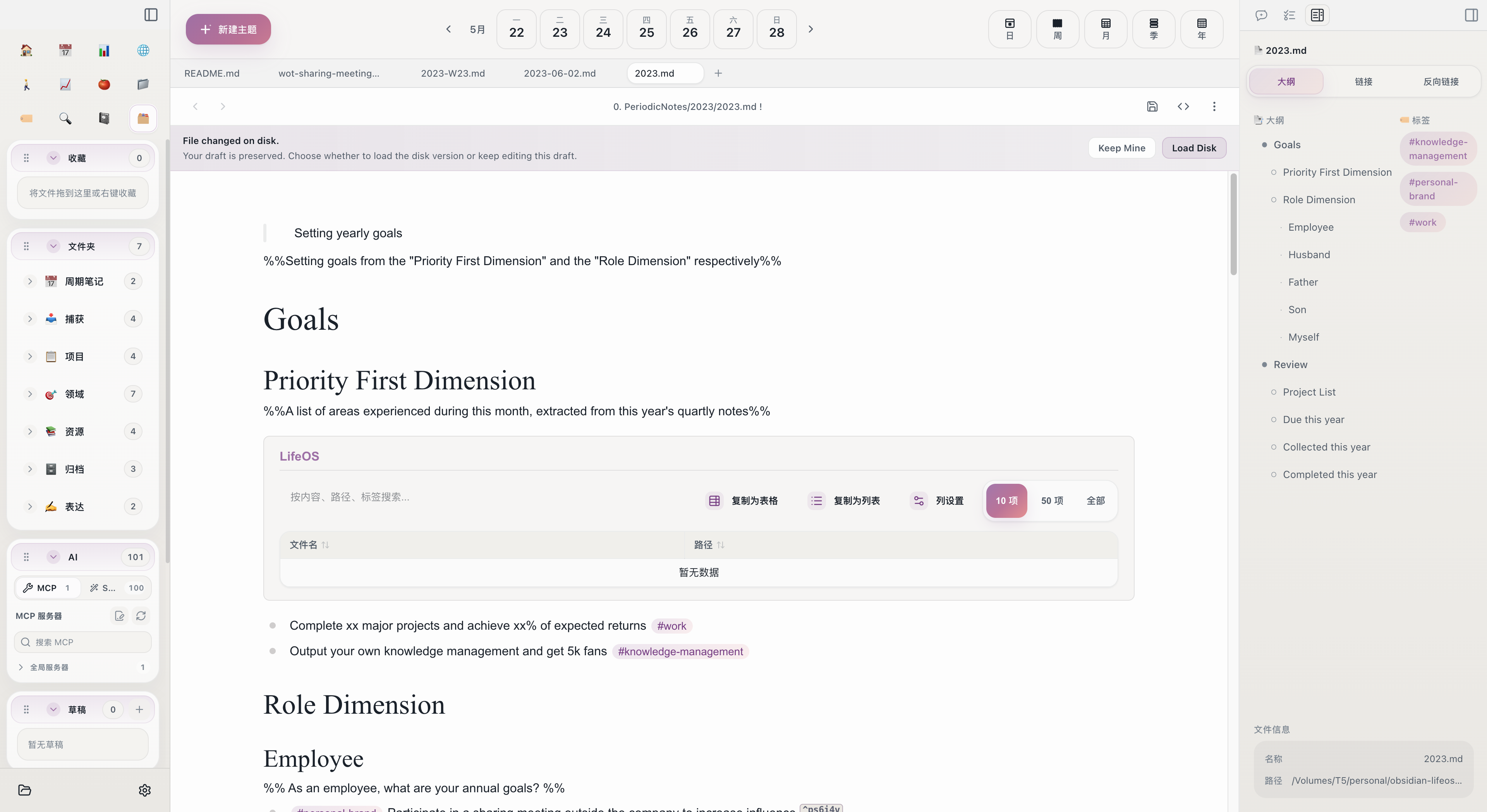
LifeOS's Periodic Notes naturally form a top-down goal management system: from annual direction to daily action, goals are broken down layer by layer and implemented level by level.
Goal Hierarchy
The higher the level, the more abstract and long-term; the lower the level, the more specific and actionable. The key is that each level is broken down from the one above, ensuring daily actions serve long-term goals.
Yearly Notes: Setting Annual Goals
The yearly note is the starting point of the entire system. At the beginning (or end) of each year, set goals from two dimensions:
Key Focus Areas
The AreaListByTime code block in the yearly note template lists all areas. For each area, consider what you want to achieve this year:
Role Dimension
Set goals from the perspective of life roles to ensure balance across all aspects:
The two dimensions cover all aspects of life from different angles and complement each other.
Quarterly Notes: Breaking Down Quarterly Goals
Each quarter, start from annual goals to formulate specific goals for the quarter.
Area Snapshots
The {{snapshot:Area}} in the quarterly note template automatically lists a snapshot of current areas. You can review the status of each area and then set improvement goals for the quarter:
Role Dimension
Break out the parts from annual role goals that can be implemented this quarter:
Monthly Notes: Breaking Down Monthly Tasks
Monthly notes start from quarterly goals and further refine them into actionable tasks for the month.
Tasks in monthly notes with deadlines will automatically appear in the calendar and task inbox.
Weekly Notes: Breaking Down Weekly Tasks
The weekly note is the level closest to execution. Select the portions to complete this week from monthly tasks:
Daily Notes: Daily Actions
Daily notes don't require setting goals -- just execute and record. Open your daily note each day, pick tasks from the task inbox to work on today, and use the Pomodoro timer for focused execution.
The daily note is the "last mile" of the entire goal system -- all directions, goals, and tasks ultimately materialize as individual action entries each day.
Top-down and Bottom-up
Goal management isn't just one-way decomposition. During reviews, information flows from the bottom up:
- Discovering certain tasks are repeatedly deferred during weekly review --> the monthly plan may be unreasonable
- Discovering slow progress in a certain area during monthly review --> need to adjust quarterly goal priorities
- Discovering annual goals are too aggressive during quarterly review --> adjust direction in a timely manner
This cycle of top-down planning and bottom-up feedback is the core of LifeOS goal management.
Related Topics
- Periodic Notes -- Complete templates for each level of periodic notes
- Project Lifecycle -- Management workflow for individual projects
- How to Review -- Specific operations for each level of review
- Review -- The overall review workflow